

The HRCI Research Hub brings together original studies, workforce polling, reports, and expert analysis, so you can act on what's happening now and prepare for what's next.
The State of HR Featured ReportsManaging the Changing Workplace: A Framework for HR
From return-to-office decisions and hybrid work to contractors and other non-traditional workers, this HRCI report explores the latest research and how HR can use data to make more informed, evidence-based workplace decisions.

Original research and expert analysis on the issues shaping HR today, from workforce safety and emerging technology to DEI and employee well-being.
From career paths to culture, this research identifies what actually separates HR professionals who are just getting by from those who are truly fulfilled—and what leaders can do to close that gap and build a more committed team.
This research uncovers where professional development is falling short, from misaligned training priorities to gaps in AI readiness, and what it takes to build a workforce equipped for what's next.
From bullying, political tension to substance use and violence prevention, this research covers workplace safety—what the data reveals, what's at stake, and what you can do to reduce risk and build a more resilient organization.
From rising absenteeism to safety risks, HRCI research reveals how extreme weather is reshaping workforce management and what HR can do now.
The State of HR
Based on HRCI’s survey of thousands of HR professionals, the State of HR report examines the issues defining the profession today. From AI and workplace culture to talent, leadership, and career growth, the report reveals how HR teams are adapting to change and preparing for the future. Explore the data, trends, and insights shaping the world of work below.
Download the Full ReportState of HR Spotlight Reports
Half of HR professionals work in environments marked by polarized viewpoints, and 4 in 10 describe their stress as extreme or high. Find out what the data reveals about conflict, mental health, and what it means for your organization.
HR professionals are broadly optimistic about their field — but over 4 in 10 are considering careers outside of it. Explore what's driving both the enthusiasm and the tension, and what it takes to build a team of true HR believers.
71% of HR professionals use AI regularly, yet more than half say implementing new technology is the area they feel least prepared to handle. See where the preparation gap is widest and what needs to change now.
83% of HR professionals believe remote work benefits organizations—but the debate is far from settled. Get the data on where HR stands on flexibility, productivity, and the return-to-office conversation.

More Insights for HR Professionals
Explore the issues shaping HR today and get the data you need to lead with confidence, make informed decisions, and move the profession forward.
Recovery friendly workplaces reduce absenteeism, improve retention, and strengthen workplace culture—yet most organizations haven't made meaningful progress. This HRCI and Fors Marsh research reveals why: stigma, undertrained HR teams, and weak leadership buy-in top the list. Understand where the gaps are and what organizations that get it right do differently.
Earning an HRCI certification builds earning power. Within four years, the median HRCI certificant earns 33% more than they did before getting certified. That's double the salary growth of comparable HR professionals over the same period. See what the data shows about the career and financial impact of HRCI certification.
HR is ready to lead, but is the organization ready to let it? This 2024 HRCI and MindEdge research report surfaces a striking disconnect: while 88% of HR professionals believe HR should drive business strategy, only half say leadership agrees. Add in underfunding, understaffing, and persistent burnout, and the case for rethinking HR's role has never been stronger.
AI is reshaping the workplace, and HR professionals are watching closely. This HRCI and MindEdge survey of HR practitioners reveals how the profession is navigating AI adoption, persistent burnout, rising turnover, and the evolving push and pull of remote work. Find out where your peers stand, and what the data means for the work you do every day.
Browse our complete library of research reports, guides, and frameworks. Whether you're building a business case, navigating a workforce challenge, or staying ahead of what's next, the intelligence you need is here.
Over three-quarters of HR professionals use AI weekly, but most have had little to no training. Learn how to build real confidence and capability starting today.
Explore how HR can turn AI adoption into a strategic advantage—balancing innovation with ethical responsibility.
This research-backed guide gives HR professionals the data and practical steps to build a recovery-friendly culture that reduces risk and supports your people.
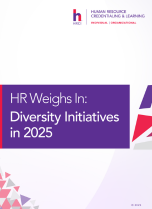
The report explores the realities of managing DEI programs in today’s climate—where values alignment, stakeholder trust, and business performance are all on the line.
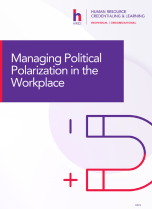
This report provides critical insights and actionable strategies for HR leaders to foster a more harmonious and productive work environment.

HRCI webinars go beyond the basics. Each session unpacks the trends, data, and real-world strategies HR professionals need to lead with confidence today and adapt to what's coming next.
News and perspectives on the issues driving the HR profession forward.
Professional credentials can be confusing. Terms like certificate and certification are often used interchangeably across industries, even though they represent different types of achievements.
In human resources, that confusion is especially common. An HR certificate and an HR certification may sound similar, but they serve distinct purposes and signal different levels of professional development. Understanding the difference is more than a matter of semantics. It affects how employers interpret your qualifications and how you position yourself within the profession.
While both credentials can strengthen your resume, they differ significantly in purpose, rigor, eligibility requirements, and career impact. Knowing the distinction ensures you invest in the option that aligns with your career goals and professional expectations.
An HR certificate is awarded after completing an educational program or course. It confirms you finished structured learning.
An HR certification is a professional credential earned by meeting defined eligibility requirements and passing a comprehensive exam that validates your knowledge and competency.
In short, a certificate verifies education. A certification verifies professional competence.
An HR certificate is typically issued by a university, college, or training provider after you complete a defined course or program in human resources. These programs often focus on subject areas such as HR fundamentals, payroll, recruiting, compliance, or analytics.
Certificate programs are education-based. You complete coursework, attend classes, or finish online modules, and then receive a certificate of completion.
They are commonly pursued by career changers, entry-level professionals, or HR team members building foundational knowledge. A certificate demonstrates initiative and subject exposure, but it does not independently validate professional-level competency.
It confirms learning, not demonstrated professional competence.
An HR certification is a credential awarded after you meet established eligibility requirements and pass a standardized exam designed to assess applied HR knowledge and decision-making ability.
Unlike a certificate, certification is not about completing a course. It is about demonstrating that you meet defined professional standards.
Many HR certifications require relevant work experience and may include ongoing renewal requirements, such as continuing education, recertification, or periodic review. Because of this structure, certification carries stronger professional signaling and is often preferred for mid-level or senior HR roles.
Certification also plays a central role in advancing HR as a recognized profession with defined standards of practice. By validating competency through independent assessment, certification reinforces credibility and accountability across the field.
Not all HR certifications are accredited. Accreditation means a credentialing program has been reviewed by an independent third-party organization to ensure it meets recognized standards for quality, fairness, and rigor. This review typically evaluates exam development processes, governance practices, security procedures, and ongoing program management.
For candidates and employers, accreditation provides an additional layer of confidence that a certification is developed according to established professional standards.
When researching certification options, it is worth asking whether the program is accredited and what standards guide development.
HR Certificate | HR Certification |
Education-focused | Credential-focused |
Awarded for completing coursework | Awarded for passing a comprehensive exam |
Usually no experience required | Often requires HR work experience |
May not require renewal | May include renewal or continuing education requirements |
Signals learning and development | Signals validated professional competence |
Employers generally view certificates as developmental credentials. They show that a candidate has invested in learning and skill-building.
Certifications, however, signal that a candidate has met defined professional standards through independent assessment. Because they involve eligibility requirements and formal evaluation processes, certifications often carry greater weight in hiring and promotion decisions.
That distinction can influence job qualifications, advancement opportunities, and compensation potential.
The right choice depends on your career stage and long-term goals. If you are new to HR or transitioning into the field, a certificate can provide structured education and foundational knowledge. If you already work in HR and want to validate your expertise or position yourself for advancement, certification is typically the stronger option.
Many HR professionals pursue both at different points in their careers, using certificates to build knowledge and certification to demonstrate competence.
Ultimately, a certificate builds knowledge. A certification validates professional competence.
No. An HR certificate is awarded after completing an educational program, while an HR certification is earned by passing a comprehensive exam that validates professional knowledge and competency. A certificate confirms you completed training; a certification confirms you met defined professional standards.
It depends on your goals. Certificates are often ideal for building foundational knowledge or entering the field. Certifications are typically more valuable for career advancement because they demonstrate validated expertise and professional credibility.
Accreditation can strengthen the credibility of an HR certification because it indicates the program has been independently evaluated against recognized standards for exam development and governance. While not all certifications are accredited, accreditation provides additional assurance of quality and rigor.
Some HR certifications require prior work experience, while others are designed for early-career professionals. Eligibility requirements vary by credential, so reviewing experience criteria is an important first step before applying.
No. A certificate is not typically required before pursuing certification. Some professionals use certificate programs to prepare for certification exams, while others qualify through work experience and independent study.