


The HRCI Research Hub brings together original studies, workforce polling, reports, and expert analysis, so you can act on what's happening now and prepare for what's next.
The State of HR Featured ReportsManaging the Changing Workplace: A Framework for HR
From return-to-office decisions and hybrid work to contractors and other non-traditional workers, this HRCI report explores the latest research and how HR can use data to make more informed, evidence-based workplace decisions.

Original research and expert analysis on the issues shaping HR today, from workforce safety and emerging technology to DEI and employee well-being.
From career paths to culture, this research identifies what actually separates HR professionals who are just getting by from those who are truly fulfilled—and what leaders can do to close that gap and build a more committed team.
This research uncovers where professional development is falling short, from misaligned training priorities to gaps in AI readiness, and what it takes to build a workforce equipped for what's next.
From bullying, political tension to substance use and violence prevention, this research covers workplace safety—what the data reveals, what's at stake, and what you can do to reduce risk and build a more resilient organization.
From rising absenteeism to safety risks, HRCI research reveals how extreme weather is reshaping workforce management and what HR can do now.
The State of HR
Based on HRCI’s survey of thousands of HR professionals, the State of HR report examines the issues defining the profession today. From AI and workplace culture to talent, leadership, and career growth, the report reveals how HR teams are adapting to change and preparing for the future. Explore the data, trends, and insights shaping the world of work below.
Download the Full ReportState of HR Spotlight Reports
Half of HR professionals work in environments marked by polarized viewpoints, and 4 in 10 describe their stress as extreme or high. Find out what the data reveals about conflict, mental health, and what it means for your organization.
HR professionals are broadly optimistic about their field — but over 4 in 10 are considering careers outside of it. Explore what's driving both the enthusiasm and the tension, and what it takes to build a team of true HR believers.
71% of HR professionals use AI regularly, yet more than half say implementing new technology is the area they feel least prepared to handle. See where the preparation gap is widest and what needs to change now.
83% of HR professionals believe remote work benefits organizations—but the debate is far from settled. Get the data on where HR stands on flexibility, productivity, and the return-to-office conversation.

More Insights for HR Professionals
Explore the issues shaping HR today and get the data you need to lead with confidence, make informed decisions, and move the profession forward.
Recovery friendly workplaces reduce absenteeism, improve retention, and strengthen workplace culture—yet most organizations haven't made meaningful progress. This HRCI and Fors Marsh research reveals why: stigma, undertrained HR teams, and weak leadership buy-in top the list. Understand where the gaps are and what organizations that get it right do differently.
Earning an HRCI certification builds earning power. Within four years, the median HRCI certificant earns 33% more than they did before getting certified. That's double the salary growth of comparable HR professionals over the same period. See what the data shows about the career and financial impact of HRCI certification.
HR is ready to lead, but is the organization ready to let it? This 2024 HRCI and MindEdge research report surfaces a striking disconnect: while 88% of HR professionals believe HR should drive business strategy, only half say leadership agrees. Add in underfunding, understaffing, and persistent burnout, and the case for rethinking HR's role has never been stronger.
AI is reshaping the workplace, and HR professionals are watching closely. This HRCI and MindEdge survey of HR practitioners reveals how the profession is navigating AI adoption, persistent burnout, rising turnover, and the evolving push and pull of remote work. Find out where your peers stand, and what the data means for the work you do every day.
Browse our complete library of research reports, guides, and frameworks. Whether you're building a business case, navigating a workforce challenge, or staying ahead of what's next, the intelligence you need is here.
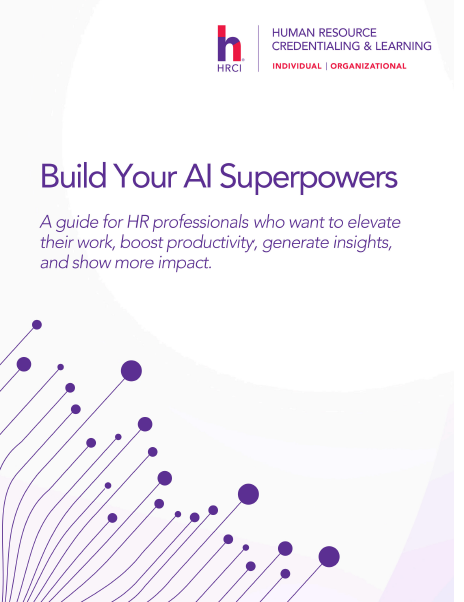
Over three-quarters of HR professionals use AI weekly, but most have had little to no training. Learn how to build real confidence and capability starting today.
Explore how HR can turn AI adoption into a strategic advantage—balancing innovation with ethical responsibility.
This research-backed guide gives HR professionals the data and practical steps to build a recovery-friendly culture that reduces risk and supports your people.
The report explores the realities of managing DEI programs in today’s climate—where values alignment, stakeholder trust, and business performance are all on the line.
This report provides critical insights and actionable strategies for HR leaders to foster a more harmonious and productive work environment.

HRCI webinars go beyond the basics. Each session unpacks the trends, data, and real-world strategies HR professionals need to lead with confidence today and adapt to what's coming next.
News and perspectives on the issues driving the HR profession forward.
Susan Russo, SPHR, GPHR, brings a global, strategic lens to HR leadership shaped by decades of experience across industries, organizational sizes, and geographies. Her work sits at the intersection of business strategy, workforce execution, and cultural understanding. In this HRCI Champion profile, Susan shares practical insights on global HR leadership, what distinguishes truly strategic HR partners, and how ongoing learning prepares leaders for the future of work.
1. You hold both the SPHR and GPHR certifications from HRCI. What motivated you to pursue these credentials, and how have they shaped your approach to HR leadership and strategy over time?
I had a great job with a Fortune 500 company in New York City where I worked as an HR consultant for small and medium-sized businesses. I was already PHR certified and wanted to continue growing in my career by pursuing a higher-level leadership position. To differentiate myself from transactional HR professionals, I pursued the more senior, strategic-based SPHR certification.
I later became eager to pursue a role that would allow me to work with people around the world, which led me to pursue the GPHR. While preparing for the GPHR, I learned far more than global compliance factors. I gained a deeper understanding of cultures different from my own. At the same time, I was traveling internationally and could observe theory in action, which solidified what I was studying.
Together, the SPHR and GPHR enable me to consider all aspects of a business, from mission, strategy, and goals through execution by a diverse global workforce.
2. You’ve worked across organizations of different sizes and scopes, including global environments. How has that breadth of experience shaped your leadership philosophy as an HR professional?
I have always believed that the primary job of a manager is to remove obstacles and provide resources. Leaders are responsible for setting the course of an organization while allocating resources responsibly.
Early in my career, I believed money was a key motivator. Over time, and through working with people across cultures, I learned that while compensation gets attention, values and purpose drive commitment and longevity. Today, I focus on helping employees see the value of their contributions and the impact of their work. Those are the most effective motivators.
3. The GPHR reflects deep expertise in global HR practices. What lessons from working across geographies or cultures have most influenced how you approach workforce planning, talent strategy, or leadership development?
There is no one-size-fits-all approach to people or business. I learned this while attempting to develop a rewards strategy that would apply across continents. While some motivators overlap, significant differences remain. What inspires one group may create friction for another.
Global work reinforced that while people everywhere have values, HR must understand those values and tailor rewards accordingly. Flexibility is critical. Depending on desired outcomes, pivots may be required quickly. Local nuances must always be understood, as they can determine how and whether an organization succeeds in a particular region.
4. From your perspective, what distinguishes HR leaders who are truly strategic partners from those who remain more operational?
Strategic partners understand business goals and the “why” behind them. They translate complex business concepts into actionable steps for others. They understand both the purpose of policies and where flexibility ends.
Strategic HR leaders earn trust by learning what success looks like and by being transparent about the human realities of the business, including what will work and what will not.
5. You’ve spent time teaching and mentoring others in the HR field. What mindsets or skills are most important for the next generation of HR leaders?
HR is far more than compliance. While compliance and ethics are essential, they should never be the endpoint. Data literacy, trend analysis, and understanding the customer are critical skills.
A growth mindset and strong communication skills are also essential. HR leaders must stay committed to learning and be able to communicate in ways that build trust and strong relationships.
6. What advice would you give HR professionals who want to expand their influence, grow into senior roles, and strengthen their credibility with business leaders?
Inside the organization, build relationships and find a sponsor who will help create visibility and opportunity. Do excellent work and make them proud.
Outside the organization, network intentionally. Certification signals competence. Apply to speak at events, publish articles, and share insights publicly. HR professionals who are strong communicators and thought leaders are far more likely to advance into senior roles.
7. Looking back on your career, is there a moment or experience that fundamentally changed how you lead or mentor others?
Everyone experiences defining moments that clarify personal values. Once I gained that clarity, I became a more effective coach and mentor. I could help others identify work and organizations aligned with their values and passions.
At the end of the day, we all want to feel proud of our work. Seeking roles that allow meaningful contribution is essential.
8. As you look ahead, what shifts or challenges will most shape the future of HR leadership, and how can certifications and ongoing learning help professionals stay prepared?
The biggest shift will be balancing technology, particularly AI, with maintaining human voice and values. The pace of change reduces the time available to learn new tools deeply.
HR leaders will face difficult choices between investing in technology and investing in people. There will be a push-pull between AI and emotional intelligence. Ongoing learning will be more critical than ever, and certifications will continue evolving to reflect these realities. Successful HR leaders will remain observant and anticipate what’s coming next.
Susan Russo is a seasoned HR leader with more than 20 years of experience supporting private and global organizations in strategic HR roles. She holds the SPHR and GPHR certifications through HRCI and brings deep expertise in global HR, leadership development, and organizational strategy. Today, she shares her perspective through teaching, speaking, and thought leadership focused on elevating HR’s strategic impact.