


The HRCI Research Hub brings together original studies, workforce polling, reports, and expert analysis, so you can act on what's happening now and prepare for what's next.
The State of HR Featured ReportsRecovery as a Workforce Strategy
Drawing on HRCI research, workforce data, and expert insight, this report examines the workplace impact of substance use disorder and the practical steps HR can take to strengthen culture, manager readiness, benefits, policies, and recovery support.
.png?sfvrsn=19b9ec76_1)
Original research and expert analysis on the issues shaping HR today, from workforce safety and emerging technology to DEI and employee well-being.
From return-to-office decisions and hybrid work to contractors and other non-traditional workers, this HRCI report explores the latest research and how HR can use data to make more informed, evidence-based workplace decisions.
From career paths to culture, this research identifies what actually separates HR professionals who are just getting by from those who are truly fulfilled—and what leaders can do to close that gap and build a more committed team.
This research uncovers where professional development is falling short, from misaligned training priorities to gaps in AI readiness, and what it takes to build a workforce equipped for what's next.
From bullying, political tension to substance use and violence prevention, this research covers workplace safety—what the data reveals, what's at stake, and what you can do to reduce risk and build a more resilient organization.
The State of HR
Based on HRCI’s survey of thousands of HR professionals, the State of HR report examines the issues defining the profession today. From AI and workplace culture to talent, leadership, and career growth, the report reveals how HR teams are adapting to change and preparing for the future. Explore the data, trends, and insights shaping the world of work below.
Download the Full ReportState of HR Spotlight Reports
Half of HR professionals work in environments marked by polarized viewpoints, and 4 in 10 describe their stress as extreme or high. Find out what the data reveals about conflict, mental health, and what it means for your organization.
HR professionals are broadly optimistic about their field — but over 4 in 10 are considering careers outside of it. Explore what's driving both the enthusiasm and the tension, and what it takes to build a team of true HR believers.
71% of HR professionals use AI regularly, yet more than half say implementing new technology is the area they feel least prepared to handle. See where the preparation gap is widest and what needs to change now.
83% of HR professionals believe remote work benefits organizations—but the debate is far from settled. Get the data on where HR stands on flexibility, productivity, and the return-to-office conversation.

More Insights for HR Professionals
Explore the issues shaping HR today and get the data you need to lead with confidence, make informed decisions, and move the profession forward.
Recovery friendly workplaces reduce absenteeism, improve retention, and strengthen workplace culture—yet most organizations haven't made meaningful progress. This HRCI and Fors Marsh research reveals why: stigma, undertrained HR teams, and weak leadership buy-in top the list. Understand where the gaps are and what organizations that get it right do differently.
Earning an HRCI certification builds earning power. Within four years, the median HRCI certificant earns 33% more than they did before getting certified. That's double the salary growth of comparable HR professionals over the same period. See what the data shows about the career and financial impact of HRCI certification.
HR is ready to lead, but is the organization ready to let it? This 2024 HRCI and MindEdge research report surfaces a striking disconnect: while 88% of HR professionals believe HR should drive business strategy, only half say leadership agrees. Add in underfunding, understaffing, and persistent burnout, and the case for rethinking HR's role has never been stronger.
AI is reshaping the workplace, and HR professionals are watching closely. This HRCI and MindEdge survey of HR practitioners reveals how the profession is navigating AI adoption, persistent burnout, rising turnover, and the evolving push and pull of remote work. Find out where your peers stand, and what the data means for the work you do every day.
Browse our complete library of research reports, guides, and frameworks. Whether you're building a business case, navigating a workforce challenge, or staying ahead of what's next, the intelligence you need is here.
From rising absenteeism to safety risks, HRCI research reveals how extreme weather is reshaping workforce management and what HR can do now.
Over three-quarters of HR professionals use AI weekly, but most have had little to no training. Learn how to build real confidence and capability starting today.
Explore how HR can turn AI adoption into a strategic advantage—balancing innovation with ethical responsibility.
This research-backed guide gives HR professionals the data and practical steps to build a recovery-friendly culture that reduces risk and supports your people.
The report explores the realities of managing DEI programs in today’s climate—where values alignment, stakeholder trust, and business performance are all on the line.
This report provides critical insights and actionable strategies for HR leaders to foster a more harmonious and productive work environment.

HRCI webinars go beyond the basics. Each session unpacks the trends, data, and real-world strategies HR professionals need to lead with confidence today and adapt to what's coming next.
News and perspectives on the issues driving the HR profession forward.
I have witnessed the struggle throughout my career.
For years, HR professionals have fought to be seen not just as administrators or policy enforcers, but as true strategic partners within their organizations.
Their familiar frustration? Despite managing the most complex and dynamic part of the business—its people—HR is too often sidelined when key decisions are made. Strategic conversations unfold in boardrooms and executive suites, while the HR voice is brought in after the fact, expected to “roll it out” or “get people on board.”
Why? One of the core reasons is perception. “People issues” are frequently dismissed as soft, emotional, or less critical compared to data, operations, or finance. Never mind that talent strategy, culture, and leadership effectiveness are some of the most potent drivers of performance and profit. There’s still a lingering disconnect between what HR professionals do and how they’re seen.
Executive presence isn’t dressing the part or delivering perfectly polished presentations. It’s the ability to show up with confidence, clarity, and credibility—especially in high-stakes settings. It’s how HR professionals signal that they belong in the room where decisions are made, and more importantly, that their insights are vital to the organization’s future.
When HR leaders consistently demonstrate executive presence, they not only elevate their own influence—they shift the entire conversation about the value of HR. They command attention not by demanding it, but by showing up as strategic thinkers who understand the business and can drive it forward through people.
Over the last several months, I presented a three-part series entitled “Cultivating Executive Presence: How to Elevate Your Leadership Presence” for HRCI’s “Alchemizing HR” webinar series. During these sessions, I described the model illustrated below.
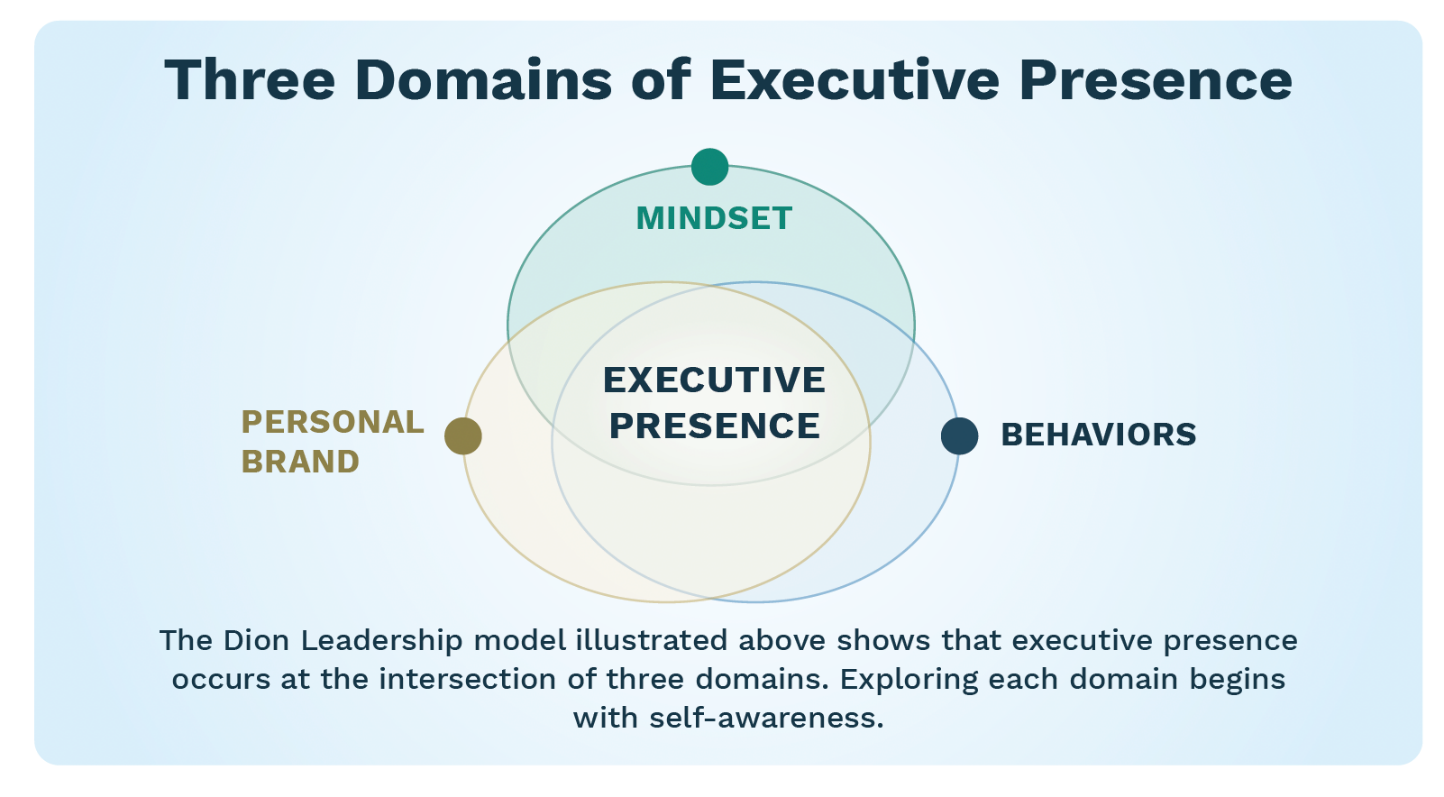
Let’s dig into this model and explore some questions to help you begin evaluating and developing your personal executive presence.
How and what you think about yourself and your abilities is at the foundation of executive presence. Your mindset directly impacts your behavior and therefore how others perceive you as a leader. As author Amy Cuddy observes, “We convince by our presence, and to convince others we need to convince ourselves.”
What story do you tell yourself about who you are as a leader? Is that story serving you well or holding you back?
As noted above, behavior follows mindset. What you do and say—and how you do it and say it—shapes how others experience you as a leader. The more positive and consistent their experience is with you, the more impactful you will be.
How does what you do and say reflect who you want to be as a leader? What is the impact of these behaviors on others? Are these behaviors serving you well or holding you back?
What others see, what they think, and how they feel in your presence are the basis for your reputation. When you have a clear idea of what you want your reputation to be, you can take the steps to shape it.
Who do you want to be as a leader? How do you want others to perceive you? Is the way you present yourself serving you well? How so? How is it holding you back?
For HR professionals striving to be recognized as strategic leaders, executive presence isn’t a “nice to have”—it’s a business imperative. By developing the key elements of executive presence, you can start to shape how others perceive your leadership and the role of HR overall.
Not every aspect of executive presence will matter equally in every context. The most effective HR leaders identify the behaviors and skills most critical to their organization’s culture, priorities, and goals—and they focus their growth there. Seeking feedback from trusted colleagues, senior leaders, and even the teams you support can provide valuable insight into where your presence has impact and where there’s opportunity for more influence.
The most important takeaway I’d like to leave you with? Executive presence isn’t something you either have or don’t have. It’s something you can build—with intention. When you choose to actively manage how you show up in the room, you take back control. You shift perceptions. You move the conversation from “HR is here to help” to “HR is here to lead.”
And when that happens, your seat at the table is no longer up for debate—it’s expected.
Want to go deeper? Download the free Cultivating Executive Presence e-book, and discover the behaviors that make the biggest difference. And if you missed my webinars and would like to catch up, you can find the recording on HRCI’s Webinar Hub.
Joe LaDuke is Vice President of Coaching and Consulting Services at Dion Leadership. He partners with organizations to craft solutions to their leadership and organizational development needs.