The HRCI Research Hub brings together original studies, workforce polling, reports, and expert analysis, so you can act on what's happening now and prepare for what's next.
The State of HR Featured ReportsRecovery as a Workforce Strategy
Drawing on HRCI research, workforce data, and expert insight, this report examines the workplace impact of substance use disorder and the practical steps HR can take to strengthen culture, manager readiness, benefits, policies, and recovery support.
.png?sfvrsn=19b9ec76_1)
Original research and expert analysis on the issues shaping HR today, from workforce safety and emerging technology to DEI and employee well-being.
From return-to-office decisions and hybrid work to contractors and other non-traditional workers, this HRCI report explores the latest research and how HR can use data to make more informed, evidence-based workplace decisions.
From career paths to culture, this research identifies what actually separates HR professionals who are just getting by from those who are truly fulfilled—and what leaders can do to close that gap and build a more committed team.
This research uncovers where professional development is falling short, from misaligned training priorities to gaps in AI readiness, and what it takes to build a workforce equipped for what's next.
From bullying, political tension to substance use and violence prevention, this research covers workplace safety—what the data reveals, what's at stake, and what you can do to reduce risk and build a more resilient organization.
The State of HR
Based on HRCI’s survey of thousands of HR professionals, the State of HR report examines the issues defining the profession today. From AI and workplace culture to talent, leadership, and career growth, the report reveals how HR teams are adapting to change and preparing for the future. Explore the data, trends, and insights shaping the world of work below.
Download the Full ReportState of HR Spotlight Reports
Half of HR professionals work in environments marked by polarized viewpoints, and 4 in 10 describe their stress as extreme or high. Find out what the data reveals about conflict, mental health, and what it means for your organization.
HR professionals are broadly optimistic about their field — but over 4 in 10 are considering careers outside of it. Explore what's driving both the enthusiasm and the tension, and what it takes to build a team of true HR believers.
71% of HR professionals use AI regularly, yet more than half say implementing new technology is the area they feel least prepared to handle. See where the preparation gap is widest and what needs to change now.
83% of HR professionals believe remote work benefits organizations—but the debate is far from settled. Get the data on where HR stands on flexibility, productivity, and the return-to-office conversation.

More Insights for HR Professionals
Explore the issues shaping HR today and get the data you need to lead with confidence, make informed decisions, and move the profession forward.
Recovery friendly workplaces reduce absenteeism, improve retention, and strengthen workplace culture—yet most organizations haven't made meaningful progress. This HRCI and Fors Marsh research reveals why: stigma, undertrained HR teams, and weak leadership buy-in top the list. Understand where the gaps are and what organizations that get it right do differently.
Earning an HRCI certification builds earning power. Within four years, the median HRCI certificant earns 33% more than they did before getting certified. That's double the salary growth of comparable HR professionals over the same period. See what the data shows about the career and financial impact of HRCI certification.
HR is ready to lead, but is the organization ready to let it? This 2024 HRCI and MindEdge research report surfaces a striking disconnect: while 88% of HR professionals believe HR should drive business strategy, only half say leadership agrees. Add in underfunding, understaffing, and persistent burnout, and the case for rethinking HR's role has never been stronger.
AI is reshaping the workplace, and HR professionals are watching closely. This HRCI and MindEdge survey of HR practitioners reveals how the profession is navigating AI adoption, persistent burnout, rising turnover, and the evolving push and pull of remote work. Find out where your peers stand, and what the data means for the work you do every day.
Browse our complete library of research reports, guides, and frameworks. Whether you're building a business case, navigating a workforce challenge, or staying ahead of what's next, the intelligence you need is here.
From rising absenteeism to safety risks, HRCI research reveals how extreme weather is reshaping workforce management and what HR can do now.
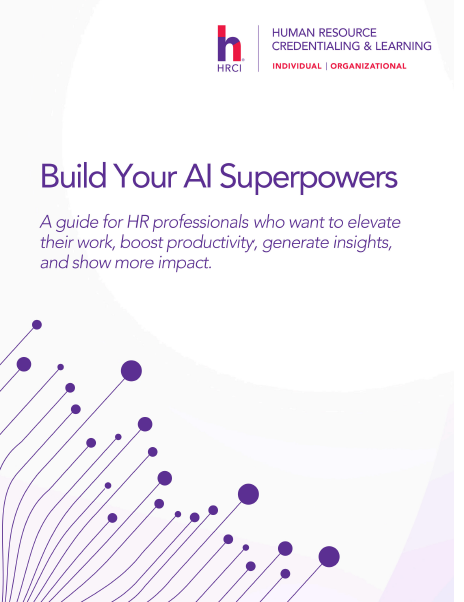
Over three-quarters of HR professionals use AI weekly, but most have had little to no training. Learn how to build real confidence and capability starting today.
Explore how HR can turn AI adoption into a strategic advantage—balancing innovation with ethical responsibility.
This research-backed guide gives HR professionals the data and practical steps to build a recovery-friendly culture that reduces risk and supports your people.
The report explores the realities of managing DEI programs in today’s climate—where values alignment, stakeholder trust, and business performance are all on the line.
This report provides critical insights and actionable strategies for HR leaders to foster a more harmonious and productive work environment.

HRCI webinars go beyond the basics. Each session unpacks the trends, data, and real-world strategies HR professionals need to lead with confidence today and adapt to what's coming next.
News and perspectives on the issues driving the HR profession forward.
The Equal Employment Opportunity Commission (EEOC) has issued a technical assistance document concerning adverse impact under Title VII of the Civil Rights Act of 1964 that results from the use of software and artificial intelligence. Due to the end of the COVID-19 public health emergency, the EEOC has updated its guidance on COVID-19 and the civil rights laws that the EEOC enforces. The Department of Labor has updated its Fair Labor Standards Act poster to include information about the PUMP Act and the Internal Revenue Service has released the 2024 health savings account contribution limits.
Artificial Intelligence Resource Issued by EEOC – The Equal Employment Opportunity Commission (EEOC) released a, technical assistance document, “Assessing Adverse Impact in Software, Algorithms, and Artificial Intelligence Used in Employment Selection Procedures Under Title VII of the Civil Rights Act of 1964,”which is designed to assist in preventing job discrimination against employees and applicants. According to EEOC Chair Charlotte A. Burrows, “This technical assistance resource is another step in helping employers and vendors understand how civil rights laws apply to automated systems used in employment.”
The EEOC noted that employers are increasingly using automated systems including those with artificial intelligence to assist with a variety of employment issues. The technical assistance document is limited to whether selection procedures such as hiring, promoting, or terminating has a large negative effect (also known as adverse impact or disparate impact) on a basis that violates Title VII of the Civil Rights Act of 1964.
The technical assistance document is part of the EEOC’s Artificial Intelligence and Algorithmic Fairness Initiative. The EEOC urges employers to undertake self-analyses to determine whether any employment practices they are utilizing result in a negative impact that is prohibited under Title VII or treat protected groups differently. The document notes that in many cases employers may be held liable under Title VII, even if a selection procedure was developed by an outside vendor.
EEOC Updates COVID-19 Technical Assistance – The Equal Employment Opportunity Commission (EEOC) released updates to its COVID-19 technical assistance document, “What You Should Know About COVID-19 and the ADA, the Rehabilitation Act, and Other EEO Laws”. The updates were made due to the May 11th end of the federal declaration of the COVID-19 public health emergency.
EEOC Chair Charlotte A. Burrows stated, “The end of the public health emergency is an important milestone, and this will help employees and employers understand how the Americans with Disabilities Act, the Rehabilitation Act, and other federal laws continue to protect our nation’s workforce from employment discrimination. The EEOC remains committed to vigorous enforcement of these laws.”
According to the EEOC, the updated technical assistance provides:
DOL Updates FLSA Poster – The U.S. Department of Labor (DOL) has updated its Employee Rights Under the Fair Labor Standards Act (FLSA) poster that employers need to display to include information about the Providing Urgent Maternal Protections for Nursing Mothers (PUMP) Act that Congress passed in December 2022. The PUMP Act became effective on December 29, 2022, when President Biden signed it. However, the effective date of its enforcement provisions was April 28, 2023.
The updated poster includes the following statement that applies to employees whether they are exempt or nonexempt from the FLSA:
“The FLSA requires employers to provide reasonable break time for a nursing employee to express breast milk for their nursing child for one year after the child’s birth each time the employee needs to express breast milk. Employers must provide a place, other than a bathroom, that is shielded from view and free from intrusion from coworkers and the public, which may be used by the employee to express breast milk.”
IRS Announces 2024 HSA Contribution Limits – The Internal Revenue Service (IRS) has announced the 2024 Health Savings Act contribution limits. The 2024 contribution limits are included in Revenue Procedure 2023-23 and were adjusted due to inflation. Health savings accounts are available for those who participate in high deductible insurance plans. For 2024¸the contribution limit for self-only coverage increases to $4,150 from the current $3,850 and the contribution limit for family coverage will be $8,300 up from the current $7,750. In 2024, to qualify as a high deductible insurance plan, a self-only plan has to have a minimum annual deductible of $1,500 and an annual out-of-pocket limit of $8,050. A family healthcare insurance plan in 2024 needs to have a minimum annual deductible of $3,200 and an annual out-of-pocket limit of $16,100.
Neil Reichenberg is the former executive director of the International Public Management Association for Human Resources. He is an attorney, a frequent writer and speaker on public policy and human resource issues, and an adjunct faculty member at George Mason University. For questions or additional information, contact Reichenberg at neilreichenberg@yahoo.com.