

The HRCI Research Hub brings together original studies, workforce polling, reports, and expert analysis, so you can act on what's happening now and prepare for what's next.
The State of HR Featured ReportsRecovery as a Workforce Strategy
Drawing on HRCI research, workforce data, and expert insight, this report examines the workplace impact of substance use disorder and the practical steps HR can take to strengthen culture, manager readiness, benefits, policies, and recovery support.
.png?sfvrsn=19b9ec76_1)
Original research and expert analysis on the issues shaping HR today, from workforce safety and emerging technology to DEI and employee well-being.
From return-to-office decisions and hybrid work to contractors and other non-traditional workers, this HRCI report explores the latest research and how HR can use data to make more informed, evidence-based workplace decisions.
From career paths to culture, this research identifies what actually separates HR professionals who are just getting by from those who are truly fulfilled—and what leaders can do to close that gap and build a more committed team.
This research uncovers where professional development is falling short, from misaligned training priorities to gaps in AI readiness, and what it takes to build a workforce equipped for what's next.
From bullying, political tension to substance use and violence prevention, this research covers workplace safety—what the data reveals, what's at stake, and what you can do to reduce risk and build a more resilient organization.
The State of HR
Based on HRCI’s survey of thousands of HR professionals, the State of HR report examines the issues defining the profession today. From AI and workplace culture to talent, leadership, and career growth, the report reveals how HR teams are adapting to change and preparing for the future. Explore the data, trends, and insights shaping the world of work below.
Download the Full ReportState of HR Spotlight Reports
Half of HR professionals work in environments marked by polarized viewpoints, and 4 in 10 describe their stress as extreme or high. Find out what the data reveals about conflict, mental health, and what it means for your organization.
HR professionals are broadly optimistic about their field — but over 4 in 10 are considering careers outside of it. Explore what's driving both the enthusiasm and the tension, and what it takes to build a team of true HR believers.
71% of HR professionals use AI regularly, yet more than half say implementing new technology is the area they feel least prepared to handle. See where the preparation gap is widest and what needs to change now.
83% of HR professionals believe remote work benefits organizations—but the debate is far from settled. Get the data on where HR stands on flexibility, productivity, and the return-to-office conversation.

More Insights for HR Professionals
Explore the issues shaping HR today and get the data you need to lead with confidence, make informed decisions, and move the profession forward.
Recovery friendly workplaces reduce absenteeism, improve retention, and strengthen workplace culture—yet most organizations haven't made meaningful progress. This HRCI and Fors Marsh research reveals why: stigma, undertrained HR teams, and weak leadership buy-in top the list. Understand where the gaps are and what organizations that get it right do differently.
Earning an HRCI certification builds earning power. Within four years, the median HRCI certificant earns 33% more than they did before getting certified. That's double the salary growth of comparable HR professionals over the same period. See what the data shows about the career and financial impact of HRCI certification.
HR is ready to lead, but is the organization ready to let it? This 2024 HRCI and MindEdge research report surfaces a striking disconnect: while 88% of HR professionals believe HR should drive business strategy, only half say leadership agrees. Add in underfunding, understaffing, and persistent burnout, and the case for rethinking HR's role has never been stronger.
AI is reshaping the workplace, and HR professionals are watching closely. This HRCI and MindEdge survey of HR practitioners reveals how the profession is navigating AI adoption, persistent burnout, rising turnover, and the evolving push and pull of remote work. Find out where your peers stand, and what the data means for the work you do every day.
Browse our complete library of research reports, guides, and frameworks. Whether you're building a business case, navigating a workforce challenge, or staying ahead of what's next, the intelligence you need is here.
From rising absenteeism to safety risks, HRCI research reveals how extreme weather is reshaping workforce management and what HR can do now.
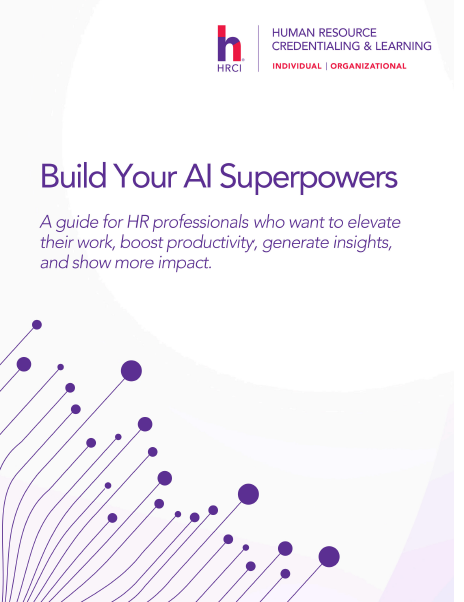
Over three-quarters of HR professionals use AI weekly, but most have had little to no training. Learn how to build real confidence and capability starting today.
Explore how HR can turn AI adoption into a strategic advantage—balancing innovation with ethical responsibility.
This research-backed guide gives HR professionals the data and practical steps to build a recovery-friendly culture that reduces risk and supports your people.
The report explores the realities of managing DEI programs in today’s climate—where values alignment, stakeholder trust, and business performance are all on the line.
This report provides critical insights and actionable strategies for HR leaders to foster a more harmonious and productive work environment.

HRCI webinars go beyond the basics. Each session unpacks the trends, data, and real-world strategies HR professionals need to lead with confidence today and adapt to what's coming next.
News and perspectives on the issues driving the HR profession forward.
Every October, National Disability Employment Awareness Month (NDEAM) recognizes the role of individuals with disabilities in the American workforce. This topic is near and dear to me, as I serve as the chair of Columbia Lighthouse for the Blind’s board. Over the years, we’ve helped prepare people who are blind or visually impaired for the job market. As a result, I’ve learned first-hand how this qualified and motivated talent contributes to the world of work.
Don’t get me wrong. I’m enormously grateful that NDEAM makes us more attentive to providing opportunities to everyone in the workforce. It’s just that I think this focus needs to be baked into our workplace DNA as a critical part of diversity and inclusion programs all year long.
NDEAM began in 1945 as a week-long observance and was expanded to the entire month of October in 1988. Since 2001, the U.S. Department of Labor’s Office of Disability Employment Policy has been responsible for extending the reach and scope of NDEAM. This year’s theme reflected disability as part of the equity equation, which was so clearly stated in the U.S. Department of Labor’s press release: “A strong workforce is the sum of many parts, and disability has always been a key part of the equation,” said Assistant Secretary for Disability Employment Policy Taryn M. Williams. “People with disabilities make up a wonderfully multifaceted group. By recognizing the full complexion of our community, we can ensure our efforts to achieve disability inclusion are, in fact, truly inclusive.”
Sixty-one million adults in the United States live with a disability. The majority have mobility issues, followed by neurodiversity, hearing, and vision. And yet, every one of these individuals has abilities – not just disabilities – that can contribute to the workforce when disability inclusion is core to an employer’s DEI programs.
Awareness is the first step in generating change. Years ago, it was very difficult for individuals with limited mobility to navigate city streets. Curbs can be major hurdles when one is in a wheelchair, and ramps weren’t ubiquitously available until the Americans with Disabilities Act of 1990. Physical barriers – such as curbs - are a great visualization for the other barriers that might exist within your organization. For example, are you giving disabled job candidates – such as those with low vision or who are neurodiverse – the chance to take pre-hire assessment tests that consider their situation without creating bias? Have you committed to 100% work-from-home positions that ensure digital accessibility? Are hiring managers trained to emphasize abilities, not limitations?
Earlier this year, National Industries for the Blind (NIB) CEO Kevin Lynch commented, “By changing people’s practices in the workplace and their perceptions about disability in general, we can create more inclusive environments where employees and companies thrive. All it takes is awareness and effort.” I agree with Kevin. The benefits of a diverse workforce are indisputable: improved productivity, increased innovation, and higher levels of employee engagement. Including people from the disability community should be an integral part of diversity initiatives and will instill pride in the employer, the employees and their served communities.